Slate has a grounded appearance that few manufactured surfaces can copy. Its layered texture, muted color shifts, and naturally uneven character can make both indoor and outdoor details feel connected to the landscape.
The key is restraint. Instead of treating slate as a covering for every wall or floor, use it where its darker tone and rough texture can provide contrast.
Work With Slate’s Natural Color Range
Slate is often associated with charcoal, but natural pieces may include blue-gray, rust, green, brown, and even faint purple tones. These shifts can become an advantage when other materials repeat one or two of those colors.
A gray slate wall beside warm oak, for example, gains softness from the wood. Rust-marked pieces can connect naturally with brick, weathered steel, or warm landscaping gravel.
Mix Texture More Carefully Than Color
Rough slate already creates strong visual movement. Pairing it with several other heavily textured finishes can make a small room feel crowded.
Smooth plaster, simple cabinetry, plain concrete, and large areas of quiet paint give the stone enough visual breathing room.
Make Entrances Feel More Grounded
Entry areas benefit from durable-looking materials because they form the transition between outdoors and indoors. Slate on a porch wall, stair riser, threshold, or small floor area can visually strengthen this zone.
Collections of patio material ideas can offer useful cues for combining dark stone with timber, planting, masonry, and outdoor lighting. Similar combinations can continue just inside the front door for a stronger connection between exterior and interior spaces.
Avoid turning every entrance surface dark. One slate feature surrounded by lighter materials often feels more balanced.
Bring Slate Into Everyday Living Areas
A fireplace wall, low hearth, or built-in bench provides enough area for slate’s character to register without dominating the room. Vertical installations can be especially effective because shadows reveal the stone’s layered edges.
Broader home design references can help when deciding how strongly a textured feature should contrast with neighboring walls. If the stone already contains visible variation, furniture and artwork can remain simpler.
| Slate Feature | Best Quality | Design Consideration |
|---|---|---|
| Fireplace surround | Strong texture | Keep nearby finishes calm |
| Entry flooring | Grounded appearance | Check surface suitability |
| Garden wall | Natural character | Coordinate with planting |
| Stair risers | Dark contrast | Maintain visual consistency |
Connect Indoor Details With the Landscape
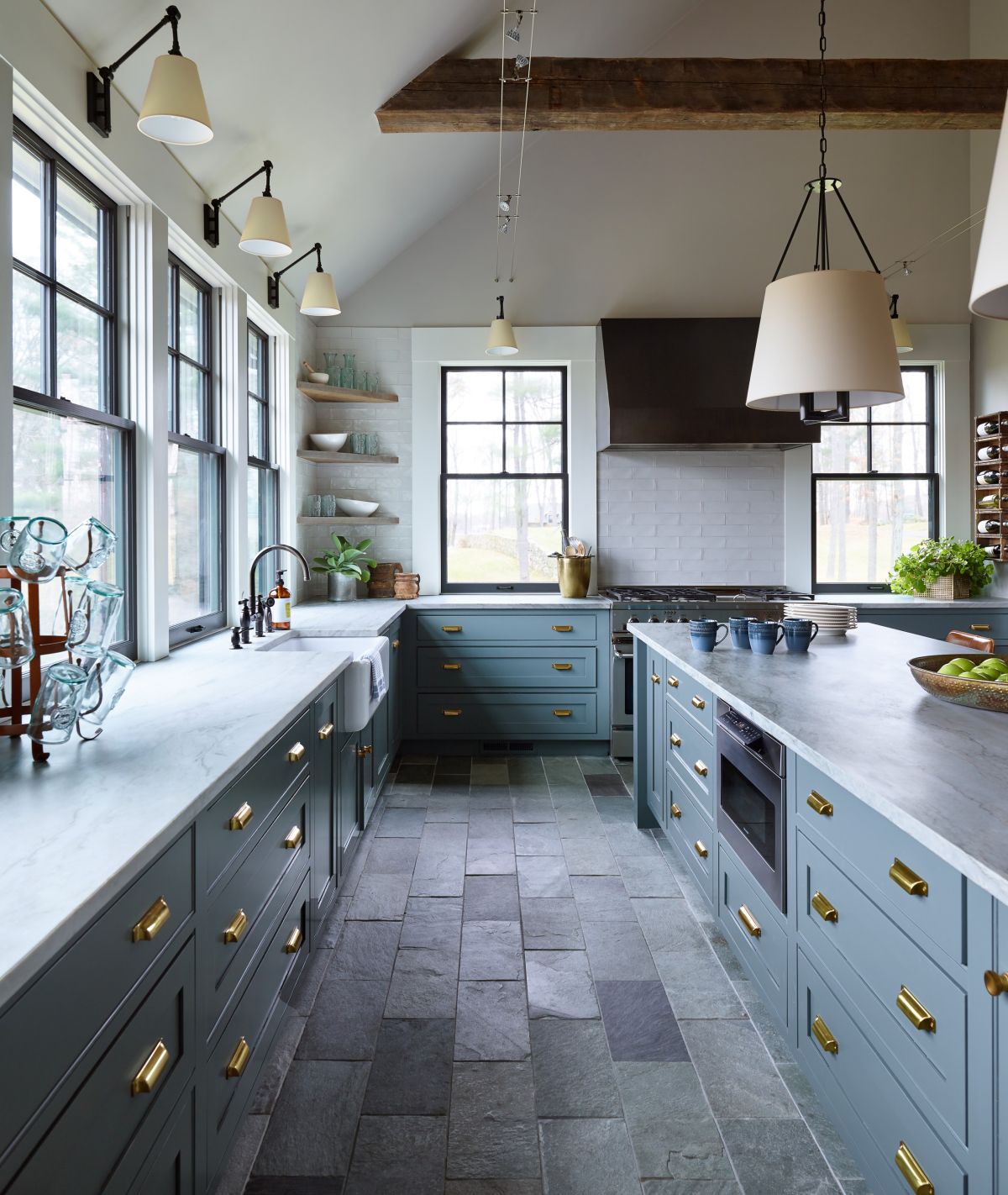
Slate feels particularly natural near large windows, garden rooms, covered patios, and spaces with abundant planting. Dark stone can frame greenery and make leaf colors appear richer.
A room influenced by relaxed home styling may use slate as the heavier material while textiles, pale walls, and warm lighting soften the overall effect. This balance prevents earthy design from becoming visually cold.
Outside, slate can also appear in planters, wall caps, paths, outdoor kitchens, or small seating-area details.
Where Slate Accents Often Go Wrong
Too much dark slate can absorb light and make compact interiors feel smaller. This becomes especially noticeable when ceilings, cabinetry, and flooring are also dark.
Using several unrelated slate colors can create another problem. A blue-gray fireplace, rusty floor, and green-toned wall may all be attractive individually but compete when placed together.
Choose a dominant slate family first. Additional pieces should support it rather than introducing an entirely different palette.
Frequently Asked Questions
Can slate be used in small rooms?
Yes, especially as a limited accent. A niche, hearth, backsplash section, or narrow feature wall can introduce texture without making the room feel enclosed.
What materials pair naturally with slate?
Timber, plaster, concrete, brick, glass, black metal, and neutral fabrics often work well. Pale oak and warm textiles can soften slate’s heavier appearance.
Is slate only suitable for rustic homes?
No. Straight layouts, large pieces, limited color variation, and simple surrounding finishes can make slate work in contemporary, industrial, minimalist, and modern-organic interiors.
Build Contrast Around the Stone
Slate doesn’t need elaborate styling to make an impression. Its strength comes from natural texture, shadow, and deep mineral color.
Choose one or two places where that character supports the architecture, then leave quieter materials around it. Used this way, slate can create earthy definition without making the home feel dark, heavy, or overly rustic.