
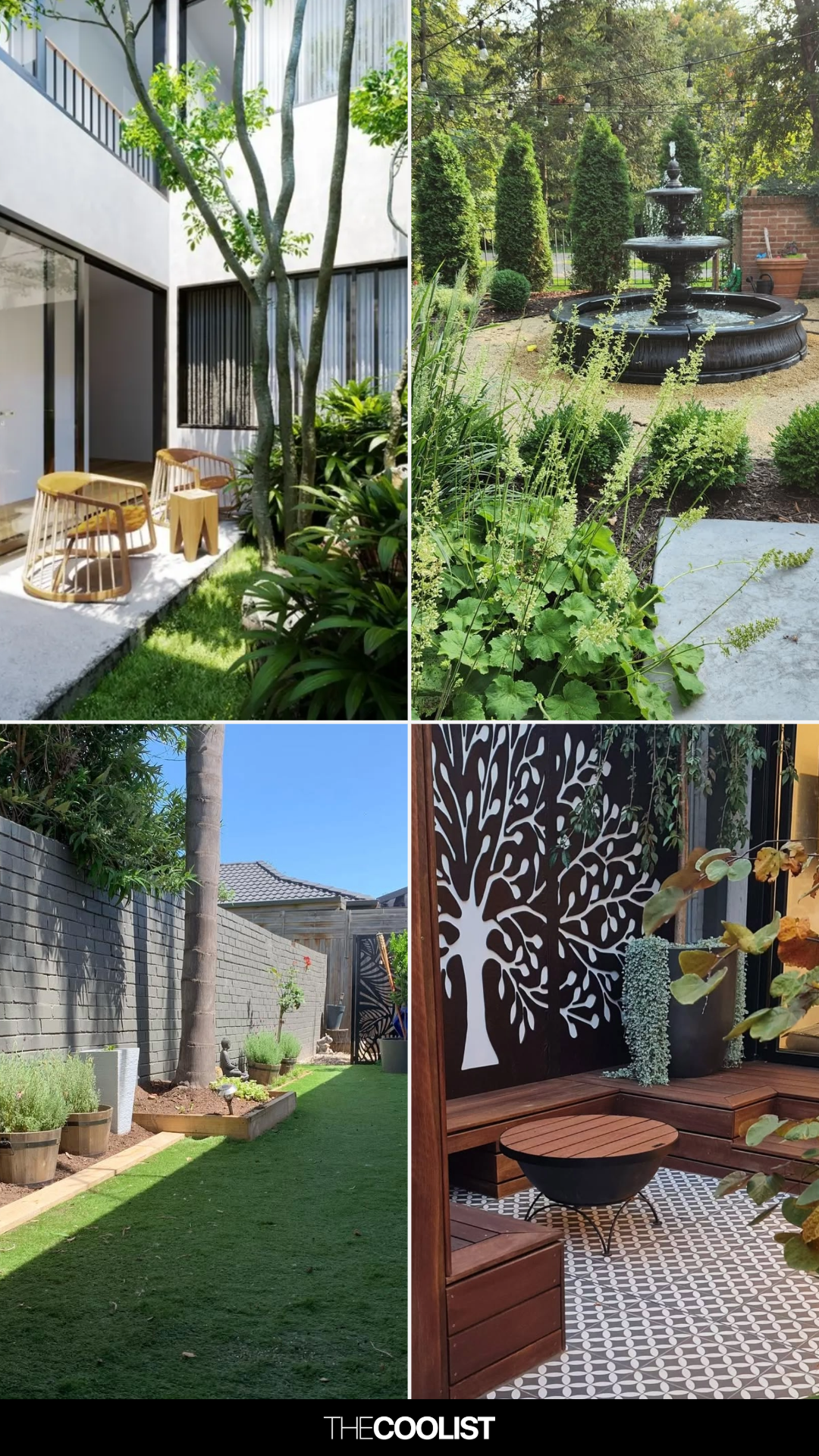
Gravel can turn an ordinary patch of ground into a flexible courtyard without creating the heavy, permanent feeling of a fully paved surface. It drains well in suitable conditions, works around existing planting, and makes furniture arrangements easy to change. The biggest challenge isn’t choosing gravel. It’s designing the layers, edges, and circulation correctly.
Shape the Courtyard Around How People Gather
Start with activities rather than dimensions. A coffee table and two chairs need a different footprint from a dining table, grill, and circulation route.
Simple rectangular courtyards are easy to furnish, while rounded or irregular shapes blend naturally into gardens. Studying different backyard living concepts can provide useful ideas for connecting loose-surface courtyards with lawns, pools, planting, and larger entertainment areas.
Leave breathing room around furniture. Chairs need space to slide backward without landing in flower beds or against edging.
Choose Gravel That Feels Stable Underfoot
Very rounded gravel moves easily when walked on and can shift beneath chair legs. Angular material tends to interlock better, creating a firmer surface once compacted.
Gravel size also changes the experience. Tiny particles can travel into nearby areas, while overly large stones may feel uncomfortable beneath lightweight furniture.
| Design Decision | Practical Effect | Main Consideration |
|---|---|---|
| Angular gravel | Firmer walking surface | Needs proper compaction |
| Strong edging | Reduces spreading | Must suit the landscape |
| Defined furniture zone | Easier arrangement | Allow chair clearance |
| Plant pockets | Softens hard surfaces | Prevent soil spillover |
Give the Courtyard a Strong Edge
Edging keeps the surface from slowly spreading into lawns and planting beds. Steel, brick, stone, timber, or concrete can all work depending on the surrounding architecture.
For outdoor spaces with a quieter, retreat-like character, rustic exterior ideas can help illustrate how natural materials and informal boundaries make gravel feel intentional instead of unfinished.
The edge doesn’t need to dominate visually. In many gardens, a nearly hidden restraint works better than a tall border.
Create Small Zones Instead of One Empty Surface
Large gravel areas can feel exposed if every function sits in one open rectangle. Break the courtyard into subtle zones using furniture placement, pots, planting strips, or a change in border material.
A dining table might occupy the center, while a bench sits near planting at one side. A compact fire feature could anchor another section where local rules and safe installation allow.
Thinking in terms of whole-property outdoor planning can also help ensure the courtyard connects logically with entrances, storage, garden routes, and other frequently used spaces.
Where Gravel Courtyards Can Become High Maintenance
Gravel is often described as maintenance-free, but that’s misleading. Leaves need removing, weeds can appear in accumulated organic material, and loose stone may escape onto neighboring surfaces.
Poor preparation creates bigger problems. If the base settles unevenly, furniture can wobble and depressions may hold water. Installing gravel directly over soft or unstable soil often leads to repeated correction.
The surface also needs thoughtful placement near doors. Small stones carried indoors on shoes can become irritating quickly, especially around frequently used entrances.
Frequently Asked Questions
Is gravel comfortable enough for outdoor dining furniture?
It can be, particularly when the material is angular, compacted, and supported by a firm base. Wide furniture feet also help prevent chairs and tables from sinking or rocking.
How do you keep gravel from spreading into grass?
A continuous physical edge provides the most reliable control. Keep the gravel slightly below the top of the edging so normal foot traffic doesn’t push stones across it.
Can plants grow around a gravel courtyard?
Yes. Planting beds, trees, large containers, and small pockets can soften the surface significantly. Keep loose soil separated from gravel to reduce mess and unwanted seed growth.
Build the Base Before Styling the Space
Furniture and plants can be rearranged whenever your needs change, but correcting a weak courtyard base is much harder. Establish the drainage, sub-base, final level, and edging first. Then add the visible design elements. A gravel courtyard succeeds when the ground stays stable and the space remains easy to use, even after the novelty of a fresh installation has worn off.