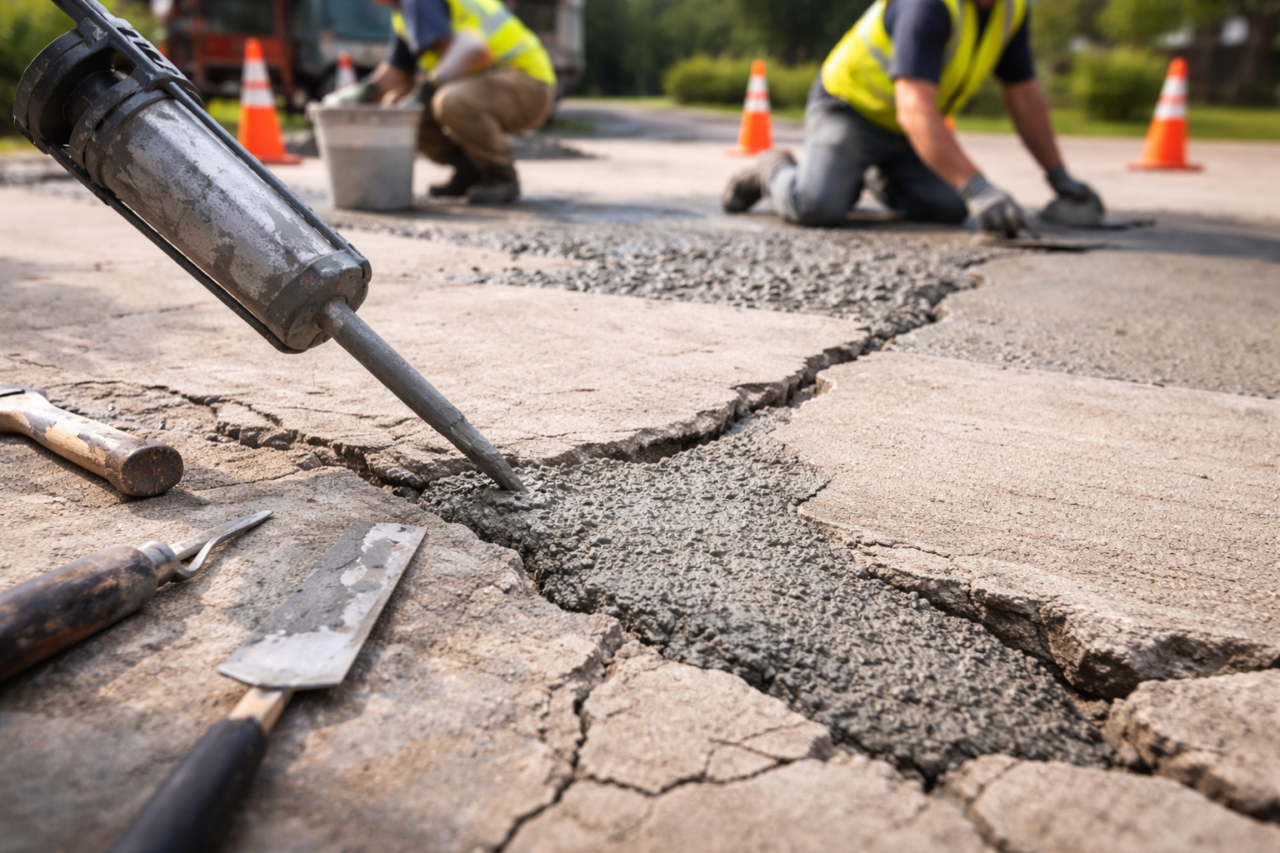
Driveway joints are designed to help concrete handle movement, but neglected joints can become pathways for water, dirt, and weeds. Good driveway joint maintenance focuses on keeping gaps clean, monitoring deterioration, and maintaining flexible sealing where appropriate. Small defects are usually easier to manage before water reaches the base beneath the slab.
Understand What the Joint Is Doing
Control and expansion joints create planned locations where movement can occur. They help reduce random cracking, but they cannot perform well when packed with debris or when surrounding concrete begins breaking apart.
Start with a visual inspection along the full driveway. Broader property care references can also help homeowners coordinate driveway checks with other exterior maintenance tasks such as drainage, edging, and seasonal surface cleaning.
Look for missing sealant, widening gaps, vegetation, standing water, and chipped concrete edges. Documenting changes with occasional photos can make slow deterioration easier to recognize.
Keep Debris and Weeds Out
Leaves, soil, gravel, and organic material can collect inside joints. Over time, that material holds moisture and creates a place for weeds to establish roots.
Remove loose debris with a stiff brush, narrow tool, or suitable cleaning equipment without damaging the concrete edge. Homeowners researching related repair routines may also encounter useful home improvement articles covering exterior surfaces and routine property care.
Deal With Vegetation Early
Pull small weeds before their roots become established. Avoid aggressive digging that chips the joint edges, especially where older concrete has already started to weaken.
| Joint Issue | Likely Effect | Maintenance Focus |
|---|---|---|
| Missing sealant | Water enters gap | Clean and reseal if suitable |
| Packed debris | Moisture stays trapped | Remove buildup |
| Weeds | Roots widen weak areas | Remove early |
| Edge chipping | Joint becomes irregular | Repair deteriorated concrete |
Control Water Around the Driveway
Water is often more damaging than the visible joint itself. Downspouts, low spots, and poor grading can repeatedly send water toward cracks and joints, increasing the chance that moisture reaches supporting material beneath the slab.
Review how water moves during heavy rain. Ideas from broader exterior planning resources may help when evaluating drainage, landscaping, and the relationship between the driveway and surrounding yard.
Redirecting unnecessary runoff can sometimes reduce future damage more effectively than repeatedly patching the same wet area.
Common Mistakes That Make Damage Worse
Filling every visible gap with a rigid material is not always a good solution. Some joints need flexibility because concrete expands and contracts as conditions change.
Another mistake is sealing over dirt, moisture, or failing material. New sealant needs a clean, properly prepared surface to bond well. If the joint edges are crumbling, address the damaged concrete before expecting a fresh seal to solve the problem.
Frequently Asked Questions
How can I tell if driveway joint sealant needs replacement?
Look for sections that have pulled away from the concrete, cracked, hardened, or disappeared. Water entering beneath loose sealant is another warning that the joint should be cleaned and evaluated.
Do driveway joints prevent all concrete cracks?
No. Joints help manage movement and encourage cracking to occur in planned locations, but concrete can still crack because of settlement, freeze-thaw cycles, poor drainage, heavy loads, or other stresses.
Should weeds in driveway joints be removed before sealing?
Yes. Remove vegetation, roots, soil, and loose material so the joint can be properly cleaned and prepared. Applying sealant over plant material usually leads to poor adhesion and short-lived results.
Protect the Base, Not Just the Surface
Successful joint care is mostly about controlling water and preserving the edges of the concrete. Keep joints clear, correct drainage problems, and replace failed sealing materials when needed. Watching how the driveway changes from season to season can help you handle small defects before they become expensive surface repairs.